Abstract
This comprehensive technical article explores the functional characteristics, structural classification, core working principles and industrial application values of Pipe Feeder, a professional tube processing equipment designed for standardized pipe cutting operations. The content systematically compares the performance differences between fully automatic and semi-automatic models, analyzes adaptive material ranges, operational logic and standardized production advantages, and sorts complete equipment parameter specifications and standard operating processes.
- 1. Basic Definition And Core Functional Orientation Of Pipe Processing Equipment
- 2. Complete Model Classification And Core Parameter Comparison Table
- 3. Unique Structural Design Advantages Of Dual-Mode Pipe Cutting Equipment
- 4. Adaptive Material Range And Industrial Application Scenarios
- 5. Standard Working Principle And Complete Operation Process
- 6. Operational Efficiency Advantages For Batch And Small-Batch Production
- 7. Professional Technical FAQ For Industrial Operators
- 8. Long-Term Application Value Of Standardized Pipe Processing Equipment
- 9. Professional Equipment Customization And Technical Support Channel
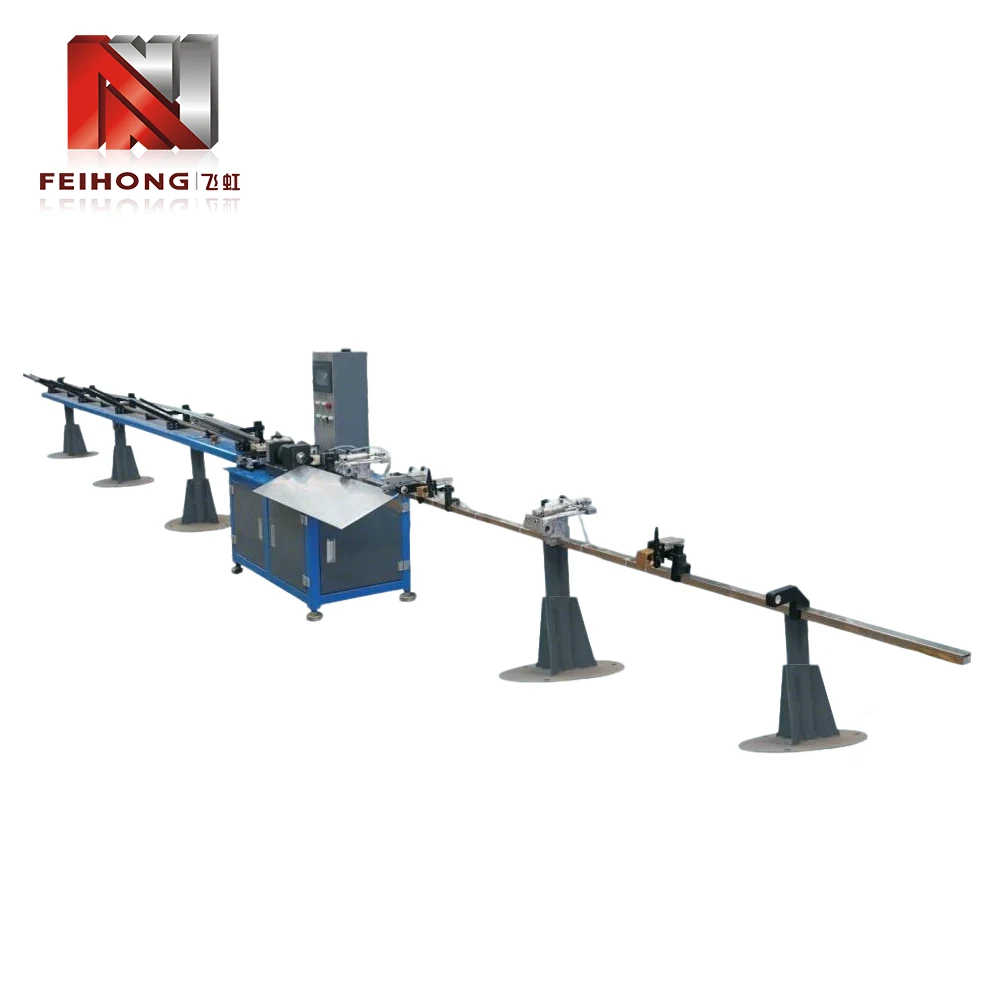
1. Basic Definition And Core Functional Orientation Of Pipe Processing Equipment
Modern industrial pipe processing scenarios put forward strict requirements for fixed-length cutting accuracy, processing consistency and operational simplicity, and professional automated pipe feeding equipment has become the core supporting hardware for tube batch production. Pipe Feeder is a specialized integrated device integrating automatic feeding and fixed-length cutting functions, independently developed for standardized pipe processing needs in machinery manufacturing, hardware processing and industrial supporting fields.
Different from traditional manual pipe cutting tools that rely on manual measurement and positioning, this professional equipment realizes mechanized and standardized whole-process control from pipe feeding, positioning to fixed-length cutting. Traditional manual processing methods are prone to dimensional errors caused by artificial measurement deviation, unstable clamping force and inconsistent cutting speed, resulting in uneven finished pipe specifications and poor batch consistency. Such defects cannot meet the precision matching requirements of modern mechanical assembly and industrial pipeline supporting components.
The core functional orientation of the equipment is to solve the pain points of low precision, low efficiency and poor consistency in traditional pipe cutting operations. Through servo motor precise control and human-machine intelligent operation system, the equipment unifies cutting standards and feeding rhythms, ensuring that each finished pipe maintains consistent dimensional accuracy and cutting flatness. Whether for large-scale mass production or small-batch multi-specification customized processing, it can maintain stable operational performance and processing quality.
With the continuous upgrading of industrial manufacturing standards, the demand for standardized pipe components in various industries continues to rise. Ordinary manual cutting equipment can no longer adapt to modern production rhythms, and intelligent automated pipe feeding and cutting equipment has gradually become the standard configuration of pipe processing workshops, effectively improving the overall standardization level of industrial pipe processing links.
- Integrated feeding and cutting design to simplify independent operational procedures
- Servo precision control to eliminate manual measurement and positioning errors
- Intelligent human-machine interface to reduce operational threshold for workers
- Dual-mode model design adapting to mass batch and small-batch production
- Multi-material adaptive processing to cover mainstream industrial pipe types
2. Complete Model Classification And Core Parameter Comparison Table
The equipment is scientifically divided into two core models according to production mode and operational logic, covering fully automatic batch processing and semi-automatic flexible processing scenarios respectively. Each model has independent structural design, control system and operational positioning, forming a complete product matrix to meet differentiated production demands of different industrial scenarios. The core parameters and functional differences of the two models are sorted in detail in the table below for accurate equipment selection reference.
| Equipment Model | Operation Mode | Core Control System | Production Adaptation Scenario | Specification Replacement Efficiency | Core Processing Feature |
|---|---|---|---|---|---|
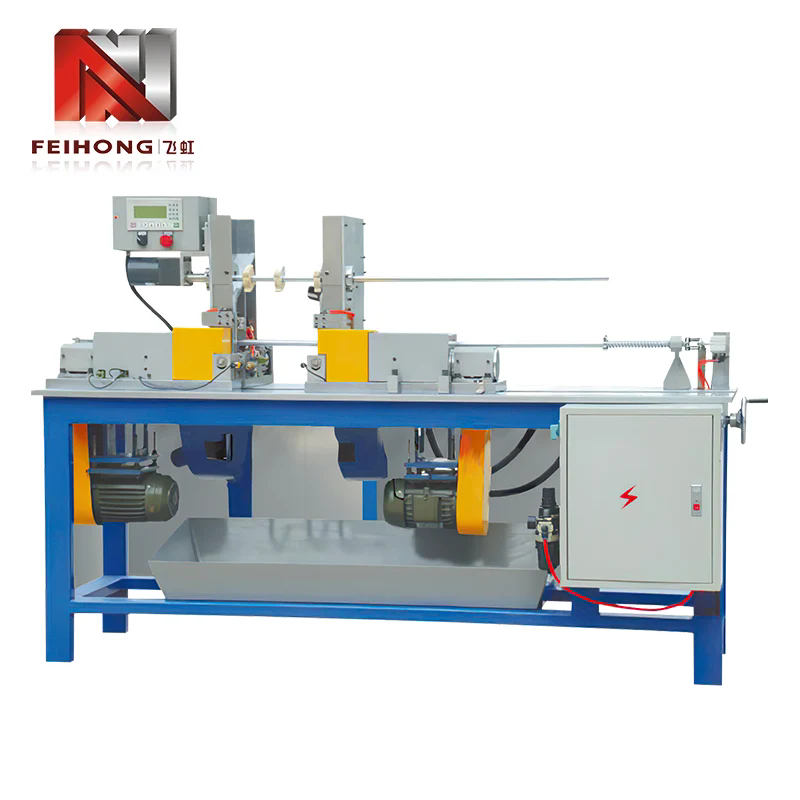
| FH-101A | Fully Automatic Feeding & Cutting | Servo Motor + HMI Intelligent Control | Large-scale mass production | Fast and convenient | Unattended continuous operation, multi-machine simultaneous management |
| FH-101B | Semi-Automatic Manual Auxiliary Cutting | Elastic Collet Manual Clamping | Small-batch, multi-specification production | Efficient and flexible | Wide specification range, flexible switching of pipe types |
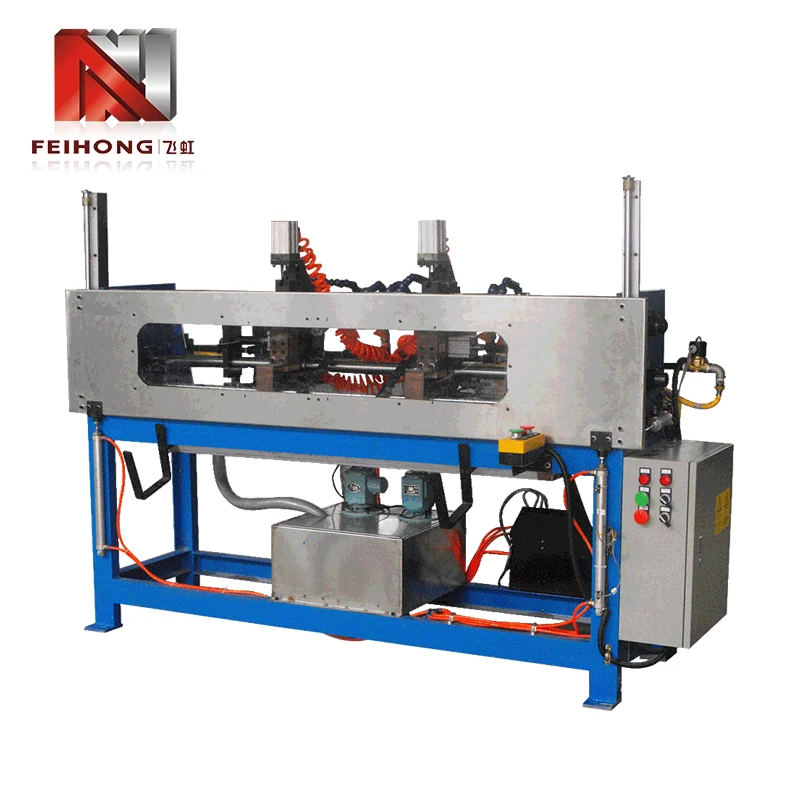
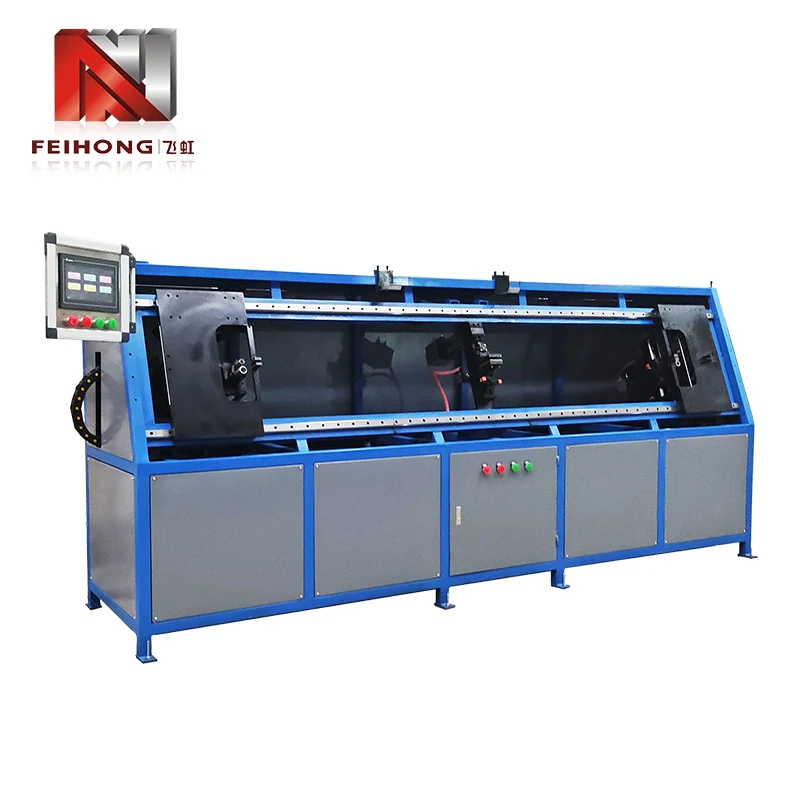
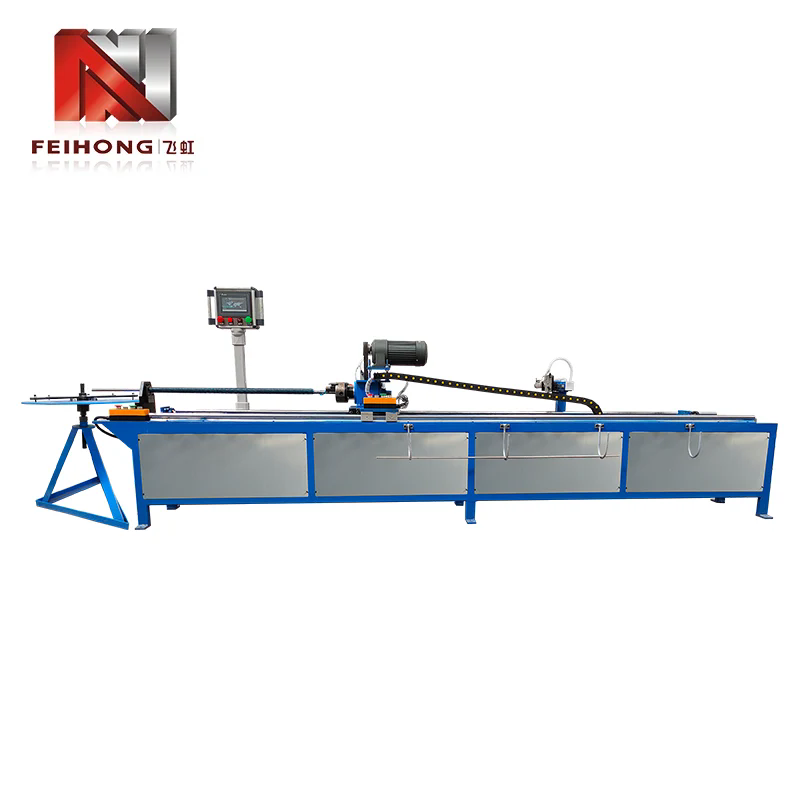
FH-101A fully automatic pipe cutting equipment focuses on high-efficiency batch production. The whole process of pipe feeding, fixed-length positioning and cutting is automatically completed by the equipment system without continuous manual intervention. The servo motor control system ensures stable feeding speed and accurate cutting size, and the human-machine interface supports parameter presetting and one-key operation, which greatly simplifies daily operational difficulty. In actual industrial production, a single worker can manage multiple fully automatic equipment at the same time, maximizing production output per capita.
FH-101B semi-automatic equipment is optimized for flexible production scenarios. Adopting elastic collet clamping structure, the equipment realizes fast clamping and specification switching, which is more suitable for industrial demands of frequent replacement of pipe specifications, wide processing range and small single-batch production volume. The semi-automatic design balances operational flexibility and processing stability, avoiding resource waste caused by large automatic equipment debugging for small-batch customized processing.
The dual-model collaborative layout realizes full coverage of industrial pipe processing demands, solving the single-scenario limitation of traditional single-function pipe cutting equipment. Enterprises can select matching models according to their own production scale and order characteristics to realize precise matching of equipment performance and production demands.
3. Unique Structural Design Advantages Of Dual-Mode Pipe Cutting Equipment
The structural design of the equipment fully considers the actual pain points of industrial production, and the two models have targeted optimized structures for their respective application scenarios. The overall mechanical structure adopts high-rigidity frame design, which maintains stable operation state during long-term high-frequency processing and avoids structural vibration affecting cutting accuracy. Pipe Feeder realizes differentiated structural innovation in automatic control and flexible clamping modules, forming irreplaceable advantages in industrial pipe processing.
3.1 Intelligent Servo Control Structure of FH-101A Model
- High-precision servo motor drive system realizes stepless speed regulation of feeding and cutting, ensuring consistent cutting speed and fixed-length accuracy for each pipe workpiece.
- Integrated human-machine operation interface centralizes all parameter setting functions, supporting fixed-length size adjustment, speed parameter modification and operation status monitoring in one interface.
- Modular mechanical structure design simplifies daily maintenance and component replacement, reducing equipment failure rate and maintenance difficulty in long-term operation.
- Linkage protection structure is installed inside the equipment to avoid equipment collision and operational faults caused by parameter setting errors, improving overall operational safety.
The servo control system is the core technical support for high-precision batch processing. Compared with traditional ordinary motor drive, servo motor has the characteristics of fast response, high positioning accuracy and stable operation, which can effectively avoid dimensional deviation caused by unstable feeding speed. In long-term continuous production, the system can maintain consistent processing accuracy without frequent parameter calibration, greatly improving production stability.
3.2 Flexible Elastic Clamping Structure of FH-101B Model
The semi-automatic model adopts customized elastic collet clamping structure, which has strong adaptability to pipes of different outer diameters. The elastic clamping mode can fit the pipe surface in all directions, ensuring firm clamping without damaging the surface of pipe workpieces. For pipes with different specifications and wall thicknesses, the equipment can complete clamping replacement in a short time without complex tooling adjustment and debugging steps.
The optimized clamping structure design greatly shortens the specification switching cycle in multi-variety production. In traditional pipe cutting equipment, replacing pipe specifications often requires disassembly and adjustment of multiple fixtures, which takes a lot of time and affects production efficiency. The elastic collet structure of this equipment realizes rapid switching of different pipe specifications, perfectly adapting to flexible production modes with frequent product replacement.
4. Adaptive Material Range And Industrial Application Scenarios
Industrial pipe processing involves a variety of metal pipe materials with different hardness and toughness, and the equipment is designed with universal processing performance to adapt to mainstream industrial pipe types. Through targeted optimization of cutting tool hardness and feeding power, the equipment can stably process various common metal pipes, meeting the processing demands of multiple industrial fields.
- Copper Pipe Processing: Suitable for soft metal copper pipe cutting in hardware and electrical industries, with smooth cutting section and no burrs
- Iron Pipe Processing: Adapt to medium-hard iron pipe fixed-length cutting for mechanical structural parts, stable cutting force and high dimensional accuracy
- Aluminum Pipe Processing: Fit lightweight aluminum pipe processing for aerospace accessories and decorative structural parts
- Stainless Steel Pipe Processing: Meet high-hardness stainless steel pipe cutting demands for equipment supporting and pipeline engineering
The wide material adaptability makes the equipment widely applicable in multiple industrial fields. In mechanical manufacturing industry, the equipment is used for fixed-length cutting of mechanical supporting pipe fittings and structural pipes to ensure the assembly accuracy of mechanical components. In hardware processing industry, it supports batch processing of various metal pipe accessories, improving product standardization.
In electrical and pipeline engineering fields, standardized pipe workpieces processed by the equipment can be used for circuit protection piping and fluid transmission pipeline accessories. The high-precision fixed-length processing effectively avoids assembly gaps and installation errors caused by uneven pipe sizes, improving the overall installation quality of engineering projects.
Whether it is standard pipe batch processing for large-scale industrial production or special specification pipe customized processing for small-batch engineering projects, the equipment can maintain stable processing performance, realizing multi-scenario and multi-industry universal application.
5. Standard Working Principle And Complete Operation Process
The working logic of the equipment follows standardized mechanical processing principles, and the two models form independent and complete operational processes according to automatic and semi-automatic modes. The whole processing flow is standardized and standardized, which can effectively avoid operational errors and ensure stable processing quality of each batch of workpieces.
5.1 Fully Automatic Model Operation Flow
- Equipment pre-inspection: Check the operation status of servo system, feeding mechanism and cutting tool to ensure no abnormal mechanical failure.
- Parameter setting: Set fixed-length cutting size, feeding speed and cutting parameters through the human-machine interface according to processing requirements.
- Raw material placement: Place the coiled or straight pipe raw materials on the feeding support frame to ensure smooth feeding.
- Automatic feeding and positioning: The servo system drives the feeding mechanism to automatically feed materials and complete fixed-length positioning.
- Automatic cutting: The cutting mechanism operates stably to complete fixed-length cutting, and the finished workpiece falls into the receiving area automatically.
- Continuous cycle: The equipment automatically repeats the feeding and cutting cycle to realize uninterrupted batch production.
5.2 Semi-Automatic Model Operation Flow
- Pre-operation debugging: Adjust the elastic collet according to the pipe specification to ensure matching clamping size.
- Manual feeding: Workers put the pipe raw material into the clamping mechanism and complete positioning.
- Clamping and fixing: The elastic collet completes automatic fitting and clamping to fix the pipe position stably.
- Auxiliary cutting: Start the cutting equipment to complete fixed-length cutting operation.
- Workpiece taking out: Release the clamping structure and take out the finished pipe workpiece to complete single processing.
The standardized operation process reduces the technical threshold of equipment operation. New operators can quickly master the operational essentials after simple training, realizing standardized production operation. At the same time, the standardized process is convenient for production management and quality inspection, which is conducive to forming unified production standards in the workshop.
6. Operational Efficiency Advantages For Batch And Small-Batch Production
Different production modes have different requirements for equipment flexibility and continuity, and the dual-model equipment layout perfectly matches the two mainstream production modes of modern industry. In batch mass production scenarios, the fully automatic model gives full play to the advantages of continuous and unmanned operation, greatly improving production efficiency. In small-batch and multi-specification production scenarios, the semi-automatic model relies on flexible switching performance to reduce equipment debugging time.
In large-scale batch production, the traditional manual cutting mode requires a large number of workers to measure, position and cut one by one, with low single-person output and unstable product quality. The fully automatic equipment can realize 24-hour continuous stable operation after parameter setting, and a single worker can take charge of multiple equipment at the same time, greatly improving the unit production efficiency of the workshop. At the same time, the machine unified processing mode ensures that the dimensional error of all finished workpieces is controlled within a tiny range, and the batch consistency is far higher than manual processing level.
For small-batch customized production with frequent specification replacement, large-scale automatic equipment needs long-time parameter debugging and tooling adjustment, which is easy to cause production time waste. The semi-automatic flexible equipment can quickly switch processing specifications through elastic clamping structure, without complex debugging steps, which can quickly respond to small-batch and multi-variety production orders and improve the flexibility of workshop production.
The complementary advantages of the two models make the equipment suitable for all types of pipe processing production modes, solving the efficiency bottlenecks of single equipment in different production scenarios, and comprehensively improving the standardized production capacity of industrial pipe processing links.
7. Professional Technical FAQ For Industrial Operators
8. Long-Term Application Value Of Standardized Pipe Processing Equipment
The popularization and application of professional automated pipe processing equipment brings long-term standardized upgrading value to industrial pipe processing links. Traditional manual processing modes are difficult to adapt to the increasingly improved industrial precision standards, and mechanical standardized processing effectively makes up for the deficiencies of manual operation in accuracy, consistency and efficiency. Pipe Feeder promotes the overall standardization and refinement of industrial pipe processing through dual-mode intelligent processing technology.
First of all, mechanical standardized processing realizes unified control of workpiece dimensional accuracy. All finished pipe workpieces are cut according to preset fixed-length parameters, eliminating individual differences caused by manual operation habits and proficiency differences. The unified processing standard provides consistent supporting parts for subsequent mechanical assembly and engineering installation, effectively avoiding assembly mismatch and rework problems.
Secondly, the automated operation mode optimizes the workshop production rhythm and realizes standardized production management. The equipment has stable operational performance and controllable production cycle, which is convenient for enterprises to formulate standardized production plans and process management specifications, improving the overall standardized management level of the production workshop.
In addition, the modular structural design reduces the difficulty of daily equipment maintenance. The standardized component configuration and simple mechanical structure make daily inspection, maintenance and fault handling more convenient, ensuring long-term stable operation of the equipment and providing continuous and reliable processing capacity for industrial production.
9. Professional Equipment Customization And Technical Support Channel
Zhaoqing Feihong Machinery & Electrical Co., Ltd. focuses on the research and development, design and manufacturing of automated pipe processing equipment, providing standardized and customized pipe feeding and cutting equipment solutions for global industrial manufacturing enterprises. The dual-mode pipe processing equipment has passed repeated mechanical debugging and industrial field testing, with stable performance, simple operation and wide adaptive range, meeting the diversified processing needs of modern industrial pipe production.
Industrial manufacturers and processing enterprises that need equipment parameter consultation, model selection guidance and customized process scheme formulation can obtain one-stop professional technical guidance and service support through the official dedicated channel.