Products
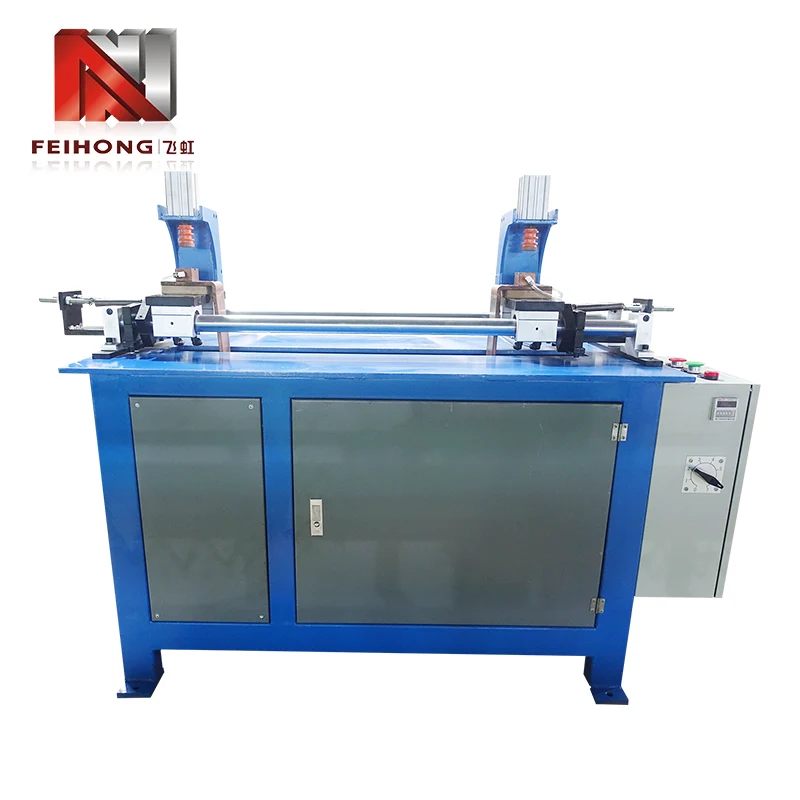
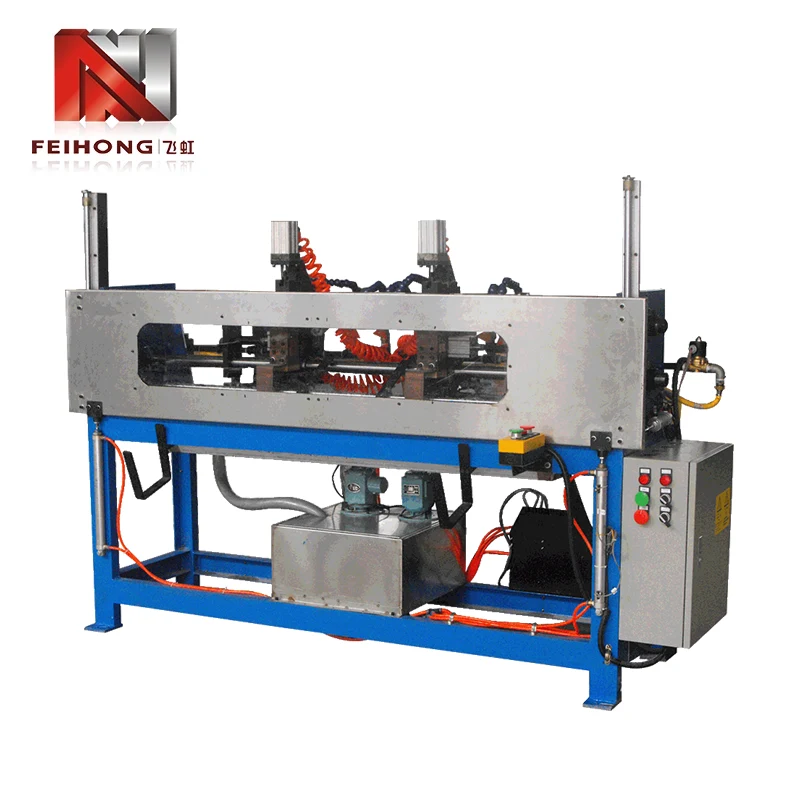
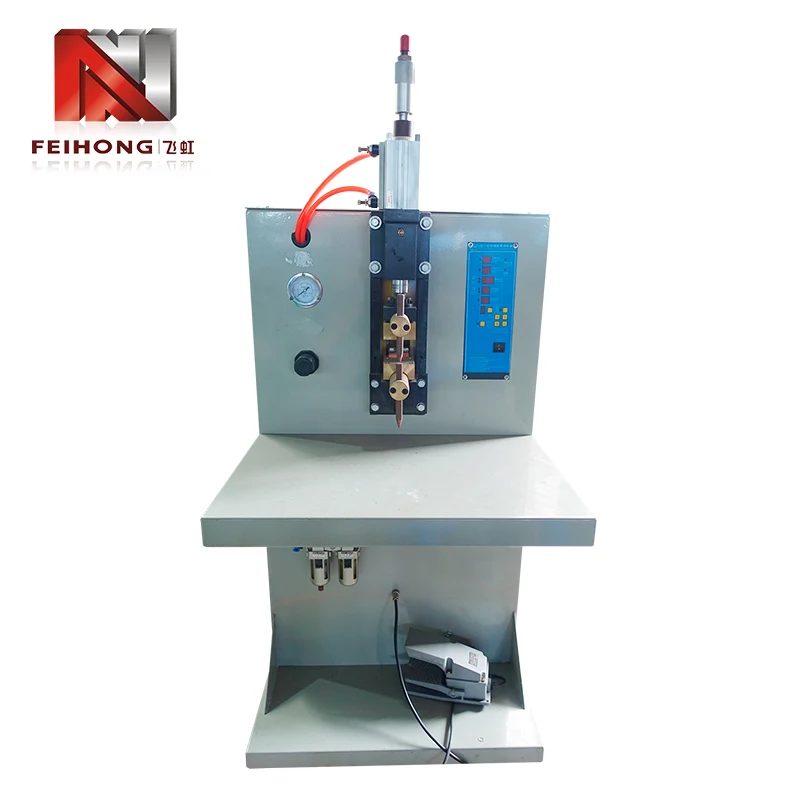
Spot Welder for Welding Lead Posts and Terminal Lug

Spot Welder for Welding Lead Posts and Terminal Lug

Model:FH-149A
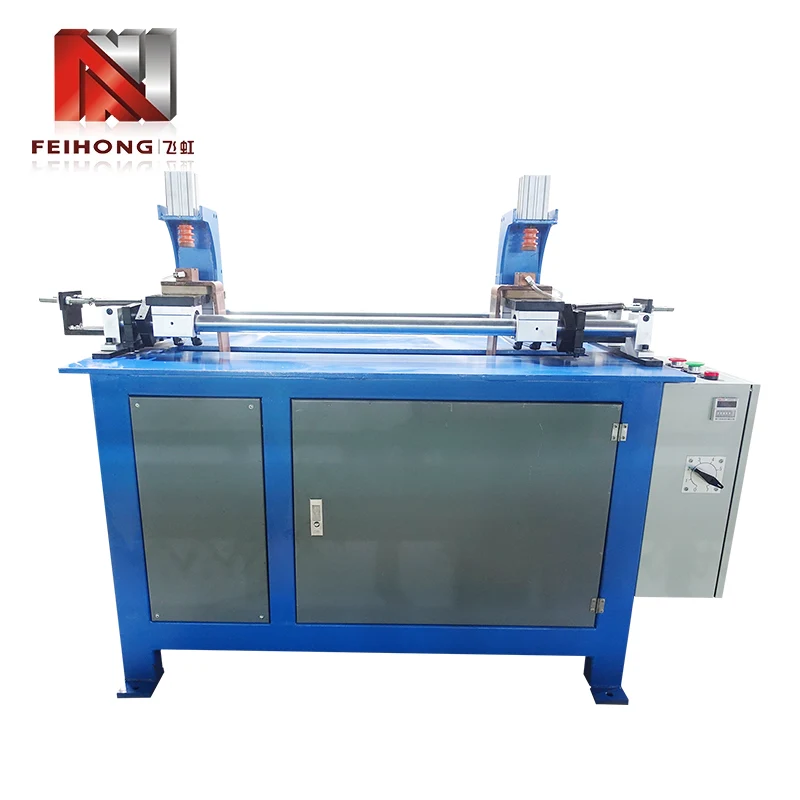
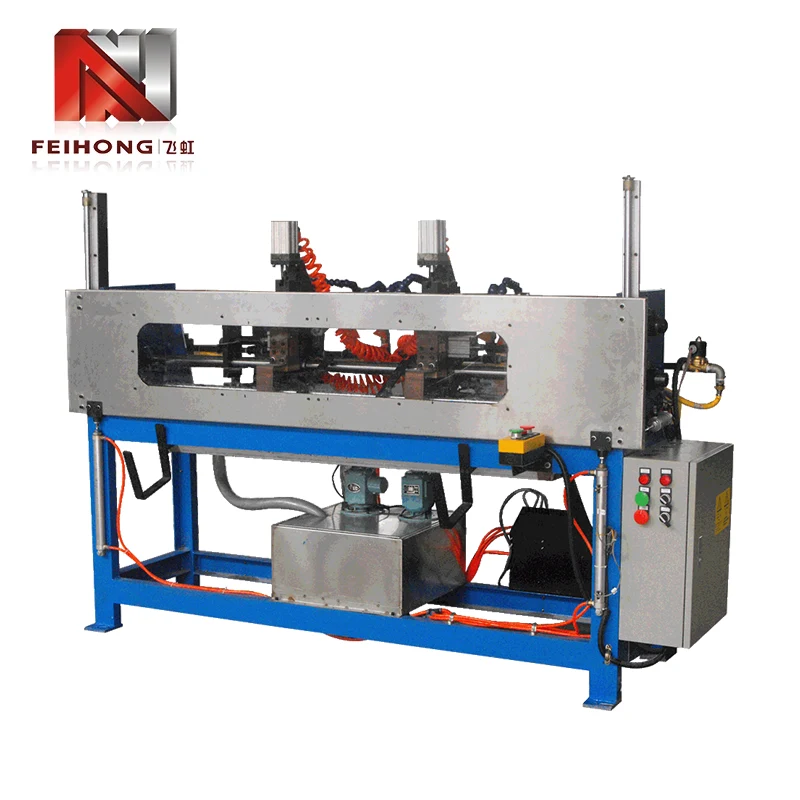
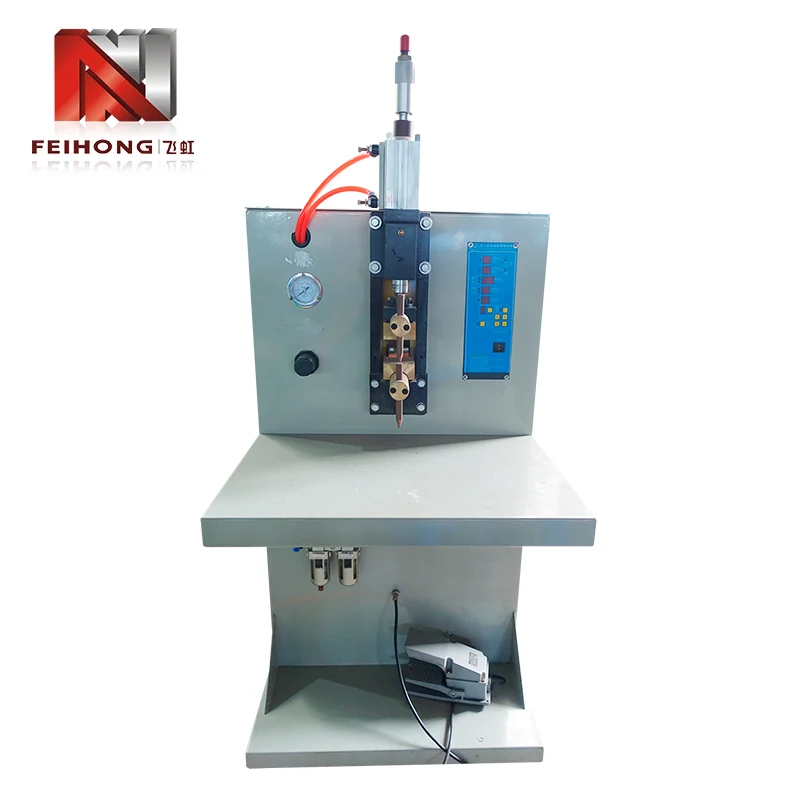
Spot Welder for Welding Lead Posts and Terminal Lugs from Feihong® — a China manufacturer with deep expertise in heating tube assembly. The integrity of every lead‑post joint directly determines heater life, and this machine is engineered to deliver consistent, low‑resistance connections across millions of cycles. Its capacitor‑discharge pulse precisely fuses dissimilar metals (Ni‑Cr, stainless, copper) without degrading the post strength, a challenge that general‑purpose welders cannot handle. When your end‑product reliability depends on terminal joint quality, Feihong® offers the specialized welding solution that has been proven in high‑mix production environments since 1992.
Feihong®’s Spot Welder for Welding Lead Posts and Terminal Lugs  is purpose‑designed for electric heating tube manufacturers who require absolute joint consistency between lead bars (or lead posts) and terminal lugs. As a supplier of complete heating tube production lines, Feihong® integrates this welder with tube filling, sealing, and testing stations. The machine accepts three‑phase 380V, three‑phase 220V, or single‑phase 220V supply, with a rated power of 2KVA and continuously adjustable capacitor voltage from 0 to 435V. Its pneumatic electrode force system, combined with rapid capacitor discharge, delivers a short‑duration pulse that creates a solid‑state weld with minimal heat‑affected zone – preserving the mechanical strength of the lead post while ensuring electrical contact resistance below 100 µΩ. With a proven throughput of 30,000 joins per 8‑hour shift, this welder meets the volume demands of large‑scale heating pipe production, while its repeatability reduces rework and field failures.


The Critical Role of Lead‑Post Welds in Heater Performance

In a heating tube, the connection between the internal resistance wire and the external terminal lug is the most failure‑prone interface. A high‑resistance joint generates local heat, accelerates oxidation, and eventually opens the circuit. This welder addresses these failure modes through three focused design choices.

  • 1. Energy precision: the capacitor voltage setting (0‑435V) allows fine‑tuning for different material combinations – for example, nickel‑chromium wire to copper lugs requires lower energy than stainless to copper.
  • 2. Electrode force stability: the pneumatic system maintains a constant clamping pressure (±2%) regardless of shop‑air fluctuations, ensuring consistent contact resistance before discharge.
  • 3. Pulse duration control: the fixed discharge time (≈8ms) is optimized for thin‑section parts, preventing melt‑through while achieving full fusion.

These features directly translate to lower reject rates and longer heater service life, which are the top priorities for heating tube manufacturers.

Electrode Configuration and Maintenance for Terminal Welding

Spot Welder for Welding Lead Posts and Terminal Lug are often made of brass or tin‑plated copper, which have different thermal properties than lead posts. Proper electrode design and upkeep are essential to achieve consistent welds without sticking or excessive indentation. The following practices are recommended by Feihong®’s application engineers.

  • 1. Electrode material selection: for copper‑based terminals, dispersion‑strengthened copper (e.g., Cu‑Al₂O₃) offers the best balance of conductivity and resistance to deformation; for steel terminals, tungsten‑copper is preferred.
  • 2. Tip geometry: a small radius (R2‑R3) on the upper electrode concentrates current for a uniform nugget, while the lower electrode should be flat or slightly domed to support the lead post without bending.
  • 3. Cleaning and dressing: oxide build‑up on the tip increases contact resistance and causes spatter. A light dressing every 500‑800 welds with a fine file or electrode dresser restores the shape and removes contaminants.
  • 4. Cooling water (optional): for continuous high‑duty cycles, water‑cooled electrode holders are available to prevent overheating and reduce tip wear.

Adopting these guidelines helps maintain weld quality over long production runs and extends electrode life, reducing consumable costs and downtime.

Parameter Tuning for Different Material Pairs

The versatility of this welder comes from its adjustable capacitor voltage and pneumatic pressure. However, finding the optimal combination for a specific material pair requires systematic testing. The table below provides starting points based on common heating tube materials.

Lead Post Material Terminal Material Capacitor Voltage (V) Electrode Force (kN)
Ni‑Cr alloy (ø2.5mm) Brass (t=0.8mm) 280‑320 1.8‑2.2
Stainless steel (ø3.0mm) Copper (t=1.0mm) 340‑380 2.0‑2.5
Copper‑clad steel (ø2.0mm) Tin‑plated copper 220‑260 1.5‑1.8
Inconel (ø2.8mm) Nickel‑plated steel 300‑350 2.2‑2.6

These values are initial suggestions; final settings should be validated by checking weld nugget diameter (target 1.2‑1.5× wire diameter) and pull‑test strength. Feihong® provides on‑site parameter optimization as part of our commissioning service.

Productivity Gains and Real‑World Case Example

Switching from a conventional AC spot welder to this capacitor‑discharge machine often yields immediate improvements in both speed and quality. A mid‑sized heating tube plant in Guangdong replaced three older units with two FH‑149A machines and achieved the following results over a six‑month period.

  • 1. Throughput increase: each machine consistently produces 30,000 welds per shift, matching the previous output of 1.5 machines, thus freeing floor space.
  • 2. Scrap reduction: the reject rate for lead‑post welding dropped from 1.8% to 0.2%, saving approximately 120,000 finished tubes annually.
  • 3. Energy saving: the capacitor‑discharge principle consumes 40% less power per weld compared to the old AC units, cutting electricity bills by over $2,000 per year.
  • 4. Operator acceptance: the simple voltage‑dial and pressure‑gauge controls reduced training time from two days to four hours.

These tangible benefits demonstrate that the investment in a specialized welder pays back quickly while improving overall production stability.

Factory Testing and Quality Certifications

Every machine leaving the Feihong® factory undergoes a comprehensive test protocol that simulates actual production conditions. Our six dedicated workshops (machining, electrical assembly, transformer winding, capacitor forming, painting, and final assembly) allow us to control quality from raw materials to finished product.

  • 1. Capacitor bank test: each capacitor is measured for ESR and capacitance; the assembled bank is subjected to 500 charge‑discharge cycles at maximum voltage to verify stability.
  • 2. Pneumatic circuit test: the cylinder stroke and pressure are checked for linearity and repeatability using a calibrated gauge.
  • 3. Welding performance test: a set of standard test coupons (Ni‑Cr wire to copper lug) is welded; the nugget diameter and tensile strength are recorded and must meet internal specifications.
  • 4. Electrical safety: insulation resistance, dielectric strength, and ground continuity are tested according to IEC 60204‑1.

Each Spot Welder for Welding Lead Posts and Terminal Lug comes with a test certificate and a 12‑month warranty covering all non‑wear parts. We also maintain a local spare parts inventory for quick replacement.

Frequently Asked Questions about Terminal Welding

Q: How do I prevent terminal lugs from discoloring after welding?
A: Discoloration is caused by oxidation from excessive heat. Reduce the capacitor voltage in 10‑volt steps until the weld is still strong but the lug retains its original color. Also, ensure the electrode force is sufficient to maintain good contact – low force can cause arcing and overheating.

Q: Can this welder handle lead posts with pre‑applied solder or coating?
A: Yes, but you may need to adjust the voltage slightly lower (by 10‑15%) because the coating can lower the contact resistance. It is advisable to clean the coating from the welding area if possible, or perform a test run to determine the optimal parameters.

Q: How often should I replace the capacitor bank?
A: With normal use (30,000 welds/shift, single shift), the electrolytic capacitors have a design life of approximately 5‑7 years or 1 million charge cycles. We recommend an annual capacitance check; if the value drops by more than 15%, replacement is recommended.

Q: What is the minimum order quantity for this machine?
A: There is no MOQ for the standard model. We sell single units as well as production line packages. Please contact our sales team for delivery times and pricing.

Energy Storage Spot Welder


Hot Tags: Spot Welder for Welding Lead Posts and Terminal Lug
Send Inquiry
Contact Info
If you have any enquiry about quotation or cooperation, please feel free to email us at judyzhufeihong@gmail.com or use the following inquiry form. Our sales representative will contact you within 24 hours. Thank you for your interest in our products.
X
We use cookies to offer you a better browsing experience, analyze site traffic and personalize content. By using this site, you agree to our use of cookies.Privacy Policy
RejectAccept